




Introduction
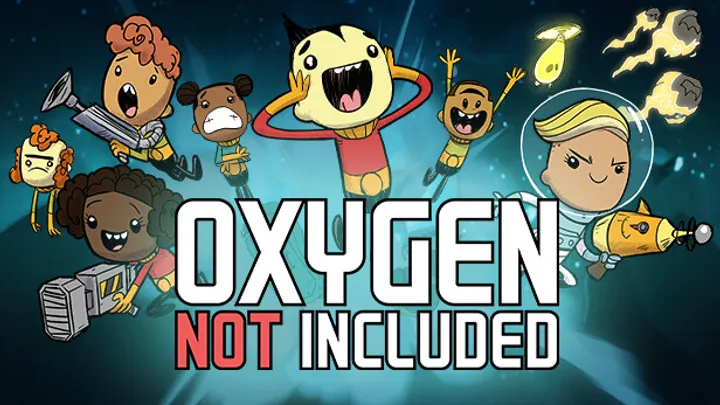
Oxygen Not Included launched as a colony simulation celebrated for its brutal honesty. Heat, gas pressure, stress, disease, and resource scarcity were not background systems—they were the game. Early colonies felt fragile, improvisational, and constantly on the brink of collapse. Every mistake had cascading consequences, and survival required genuine understanding rather than surface-level optimization.
However, long-term player behavior and post-launch discussions have highlighted a specific structural issue: Oxygen Not Included’s mid-game complexity collapses once optimal systems are discovered, flattening difficulty and turning survival into maintenance. This article examines how mastery undermines tension, why the mid-game becomes the weakest phase, and what this reveals about simulation-heavy design.
1. Early-Game Chaos as the Game’s Strongest Phase
The opening hours of Oxygen Not Included are chaotic by design. Oxygen runs low, duplicants panic, heat spreads uncontrollably, and food production barely stabilizes.
Players react emotionally rather than strategically. Solutions are temporary, messy, and often wrong—but they work just long enough to survive.
This fragility is where the game shines.
2. Discovery Turns Survival Into Engineering
Learning Replaces Risk
Once players learn key systems—electrolyzers, cooling loops, gas separation—the game shifts tone. Problems stop being existential and become engineering challenges.
Instead of asking “Will we survive?”, players ask “How efficiently can we scale?”
Blueprint Thinking Takes Over
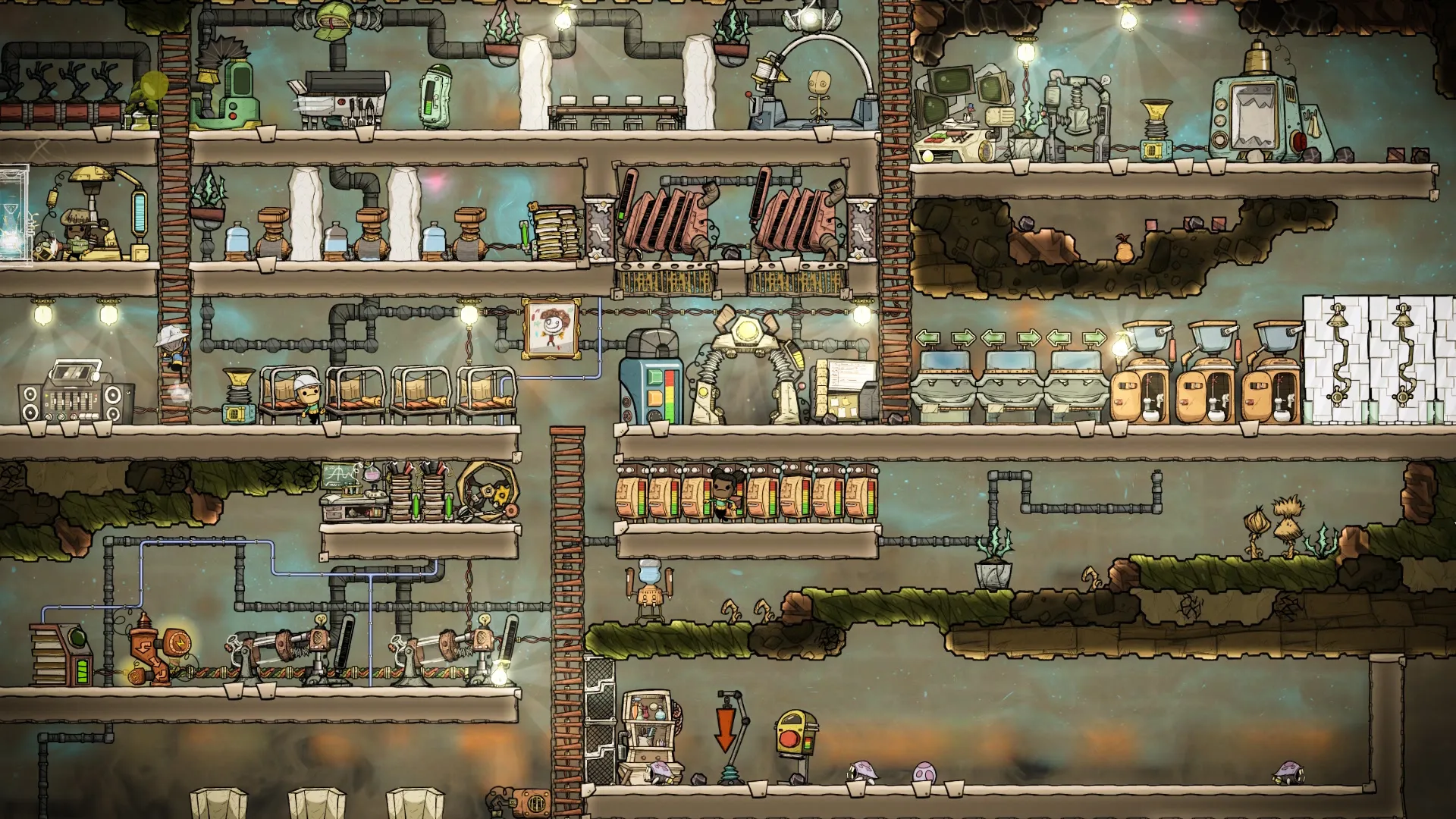
Colonies begin to resemble schematics rather than habitats. Improvisation disappears.
3. The Mid-Game Plateau Emerges
A Sudden Drop in Pressure
After stabilizing oxygen, food, and temperature, colonies enter a prolonged stable phase. Resources are no longer scarce, and emergencies become rare.
This is the mid-game plateau—technically complex, but emotionally flat.
Why This Phase Feels Hollow
The player is busy, but not threatened. Systems run themselves.
4. Optimal Solutions Are Too Final
Once Solved, Always Solved
Many systems in Oxygen Not Included have “correct” solutions. Once implemented, they rarely need revision.
Examples include:
- Closed-loop oxygen production
- Steam turbine cooling
- Automated food farms
Once built, these systems permanently eliminate entire categories of risk.
No Regression Mechanism
The game rarely forces systems to fail or evolve. Stability is permanent.
5. Automation Removes Emotional Stakes
Duplication Without Drama
Automation is satisfying, but it removes human error—one of the main drivers of tension.
Duplicants stop being characters and become maintenance units.
Colonies Feel Mechanical
The more automated the base becomes, the less it feels alive.
6. Late-Game Content Cannot Restore Tension
Space and Rockets Arrive Too Late
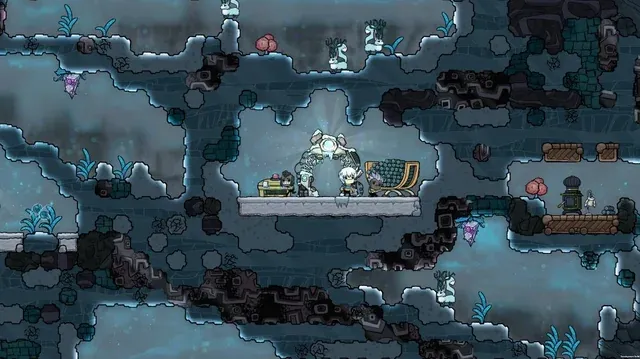
Late-game systems introduce complexity, but by then the player’s core colony is invulnerable.
New challenges feel disconnected from survival rather than extensions of it.
Difficulty Shifts, Not Escalates
The game adds tasks, not danger.
7. Community Meta Accelerates the Collapse
Shared Blueprints End Experimentation
Guides and community designs dramatically reduce learning curves. New players reach the mid-game plateau faster than ever.
Solved Before It’s Played
The game’s depth becomes theoretical rather than experiential.
8. Simulation Transparency Works Against Itself
Systems Are Too Understandable
Oxygen Not Included clearly communicates its mechanics. While this is excellent design, it also makes optimization inevitable.
Once understood, systems lose mystery.
Transparency vs Longevity
Perfect clarity shortens tension lifespan.
9. What Oxygen Not Included Teaches Simulation Design
The game highlights a key dilemma:
- Players love solving systems
- Solved systems stop generating tension
- Stability is satisfying—but boring
Future simulations may need mechanics that decay, mutate, or fight back.

10. Can the Mid-Game Be Fixed?
Possible Directions
- Environmental entropy that increases over time
- Systems that degrade unpredictably
- Colonist psychology that resists automation
Each risks frustration—but without risk, survival fades.
Why the Game Still Matters
Oxygen Not Included remains one of the most honest simulations ever made, even if it cannot sustain its own danger.
Conclusion
Oxygen Not Included begins as a desperate survival story and gradually transforms into a controlled engineering exercise. This shift exposes a fundamental issue in simulation-heavy games: once systems are mastered, danger disappears. The mid-game collapse is not a failure of content, but a consequence of clarity and solvability.
Its legacy is not diminished by this flaw—it is defined by it.
160-character summary
Oxygen Not Included loses survival tension mid-game as optimal systems stabilize colonies, turning chaos into permanent, risk-free engineering.