The Depths of Despair: Deconstructing the "Hook-Sync" Desynchronization in Roblox: Fish It
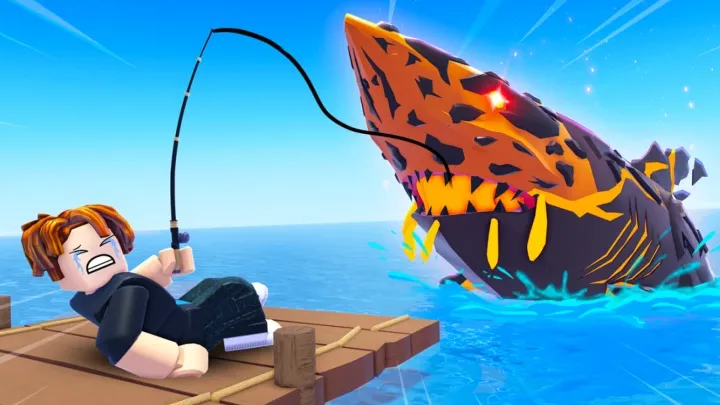
In the expansive blue horizons of Roblox: Fish It, players are promised a tranquil escape into the world of professional angling. The game differentiates itself from other simulators by emphasizing a "physics-first" approach to the catch, where the tension of the line and the weight of the water are meant to feel tangible. However, as players progress into the high-stakes competitive tiers, they encounter a specific, grueling technical hurdle that shatters the serenity of the experience: the Hook-Sync Desynchronization. This is not a simple case of "lag"; it is a fundamental conflict between the client-side predictive animation and the server-side catch verification that makes landing legendary-tier fish a mathematical lottery rather than a test of skill.
1. The Genesis of the "Hook-Sync" Conflict
To understand the specific issue in Fish It, one must look at how the game handles the moment a fish bites. Most Roblox fishing games use a "Snapshot" method—you click, the game checks a probability table, and you win or lose. Fish It, however, uses a "Tension-over-Time" mechanic. When a fish strikes, the server begins a high-frequency polling of the player’s input. The "Hook-Sync" issue arises when the server's polling rate fails to match the client’s visual representation of the "Sweet Spot."
This creates a "Ghost Bite" scenario. On your screen, the bobber descends, and the haptic feedback triggers, but the server has already registered a "Miss" because of a millisecond-level discrepancy in packet travel. For casual players catching mackerel, this is negligible. For those hunting the "Midnight Leviathan," where the catch window is exactly 0.12 seconds, it becomes an insurmountable wall that turns the game's core mechanic into a source of profound frustration.
2. Navigating the Early-Game Latency Buffer
In the initial stages of Fish It, the developers implemented a "Latency Buffer" to hide these synchronization issues. This buffer effectively widens the catch window for common fish, allowing the server to "forgive" minor desyncs. This creates a false sense of security for the player. You feel as though you have mastered the timing, not realizing that the game is merely smoothing over the cracks in its own architecture.
The problem with this buffer is that it doesn't scale. As you upgrade to the "Titanium Reel" and move to the "Abyssal Trench," the buffer is removed to increase the difficulty. Suddenly, the player is forced to confront the raw, unpolished reality of the netcode. The transition is jarring; the game shifts from feeling responsive to feeling "slippery," where inputs that worked perfectly in the "Coral Shallows" now result in snapped lines and lost bait.
3. The Physics of the "Abyssal Snap"
When the "Hook-Sync" fails during a high-tier catch, it triggers the Abyssal Snap. This is a specific physics-glitch where the line tension value overflows. Because the client thinks the line is slack and the server thinks the line is at maximum tension, the engine calculates a force that exceeds the "Breaking Strength" of even the most expensive gear.
Anatomy of a Snap
- Vector Miscalculation: The fish's AI attempts to swim away from a coordinate the client hasn't loaded yet.
- Tension Spiking: The UI bar jumps from 10% to 100% in a single frame.
- Input Rejection: The "Release Tension" command is ignored because the server believes the line has already snapped, even while the animation continues on the client.
4. Economic Consequences of the Desync Loop
The "Hook-Sync" issue isn't just a mechanical annoyance; it is a financial disaster for the player. High-tier bait, like the "Glowing Plankto-Mote," costs thousands of in-game Credits. When a desync causes an "Abyssal Snap," the bait is consumed, the gear is damaged, and the player receives zero compensation.
The Cost of Failure
- Bait Loss: Rare baits are lost instantly upon a desync.
- Repair Bills: Gear durability drops by 15% per snap, requiring a "Reel Polish" that costs real-world Robux or an exorbitant amount of playtime.
- Opportunity Cost: The 1% spawn rate of legendary fish means a desync might rob you of a chance that won't appear again for dozens of hours.
5. The "Tournament-Day" Server Strain
The specific issue of desynchronization reaches its peak during the "Weekly Angler Tournament." When hundreds of players congregate on the same server cluster to compete for the leaderboard, the tick-rate of the server begins to oscillate. This turns the "Hook-Sync" from an occasional bug into a persistent environmental hazard.
During these events, the "Catch Success Rate" across the server drops significantly, not because the players are worse, but because the server cannot process the "Tension-over-Time" calculations for that many concurrent entities. This leads to the "Tournament Paradox": the most skilled players are the most likely to lose, as they are the ones targeting the fish with the tightest, most desync-prone catch windows.
6. Community Workarounds: The "Tap-Wait" Strategy
In the absence of a developer fix, the Fish It community has developed a series of esoteric "workarounds" to combat the desync. The most famous is the "Tap-Wait" strategy. Players have discovered that by clicking slightly before the visual cue and then holding the input for exactly three frames, they can occasionally "force" the server to acknowledge the sync.
The Meta of Mitigation
- Ping-Sniping: Players will "hop" servers until they find one with a latency of exactly 40ms, as the game's internal clock seems to favor this specific speed.
- Animation Canceling: Using a "Gesture" emote right before casting to reset the client’s animation state, theoretically aligning it with the server's starting tick.
- Low-Detail Mode: Disabling water reflections to free up processing power for input polling.
7. The "Broken Reel" Animation Glitch
A side effect of the Hook-Sync desync is the "Infinite Spin" or "Broken Reel" glitch. This occurs when the server registers a successful catch, but the client registers a snap. The player is left standing on the dock with a reel that spins infinitely, unable to move or recast.
This specific issue requires a full character reset. In Fish It, resetting your character during an active session clears your "Luck Multiplier," a hidden stat that increases the longer you fish without stopping. Thus, a single desync can effectively reset hours of "Luck" accumulation, forcing the player to start their grind from zero. It is a punitive cycle that discourages long-form play.
8. Analyzing the Developer’s "Anti-Cheat" Interference
Investigations by the community's technical enthusiasts suggest that the specific "Hook-Sync" issue may be aggravated by the game’s aggressive anti-cheat software. To prevent "Auto-Fishing" bots, the game introduces random "Input Jitter." This jitter is intended to confuse bots that use perfect timing.
However, for a human player, this jitter feels like an unpredictable desync. The anti-cheat is essentially fighting the player for control of the rod. By trying to stop bots from having 100% accuracy, the developers have inadvertently made it impossible for humans to have 100% accuracy, as the "Sweet Spot" moves unpredictably regardless of the fish’s behavior.
9. The Psychological Toll of the "Near-Miss"
The most insidious part of the Hook-Sync issue is the "Near-Miss" feedback. Because the client-side animation is predictive, it often shows the fish jumping out of the water and nearly landing in the boat before the server-side "Snap" command takes over.
This creates a psychological state of "Gambler’s Fallacy." The player sees that they almost won, which encourages them to spend more Credits on bait to try again. In reality, they didn't "almost" win; the server had decided they lost the moment the "Input Jitter" or "Desync" occurred. This makes the game feel predatory, whether the developers intended it or not, as it exploits the visual of success to mask a systemic failure.
10. Conclusion: The Future of the Horizon
Roblox: Fish It remains one of the most visually stunning and conceptually deep fishing games on the platform. Yet, the Hook-Sync Desynchronization stands as a testament to the fragility of "Hard-Sim" mechanics in a high-latency environment. For the game to reach its true potential, the developers must address the specific issue of server-client alignment, perhaps by moving catch-verification to the client-side or by significantly increasing the server tick-rate during legendary encounters.
Until then, the "Abyssal Trench" remains a graveyard not of fish, but of player intentions. To master Fish It is to accept that you are not just fighting the fish, but the very code that brings them to life. The true legendary catch isn't the one in the water; it's the one that manages to bypass the desync and find its way into your inventory. As the sun sets over the digital ocean, the sound of snapping lines remains the definitive anthem of a game caught between its own ambition and its technical limitations.
Summary: This article analyzes the "Hook-Sync" desynchronization in Roblox: Fish It, a mechanical flaw where server-client lag causes unfair line snaps and resource loss