.webp)

Overwatch arrived in 2016 as a revolutionary breath of fresh air in the hero shooter genre. It wasn't just about aim; it was about the synergy of a six-person unit, a tactical puzzle where each piece was useless without the other. However, as the game transitioned into Overwatch 2 and moved toward a 5v5 format, a specific and deep-seated issue emerged: the systematic erosion of hero interdependency in favor of "individual impact." This shift has fundamentally altered the game's DNA, turning a complex social and tactical simulation into a faster, more lethal, but arguably more hollow experience.
This deep dive explores how the transition from a synergy-based model to a brawler-centric model has created a crisis of identity for the game. We will examine the mechanics of the "Tank" role, the homogenization of "Support" utility, and the unintended consequences of removing the "Off-Tank" position. By looking at specific balance patches and design philosophies, we can see how the very thing that made Overwatch unique—its reliance on teamwork—has become the very thing the developers are actively designing against.
1. The Golden Era of the Off-Tank: A Symphony of Synergy
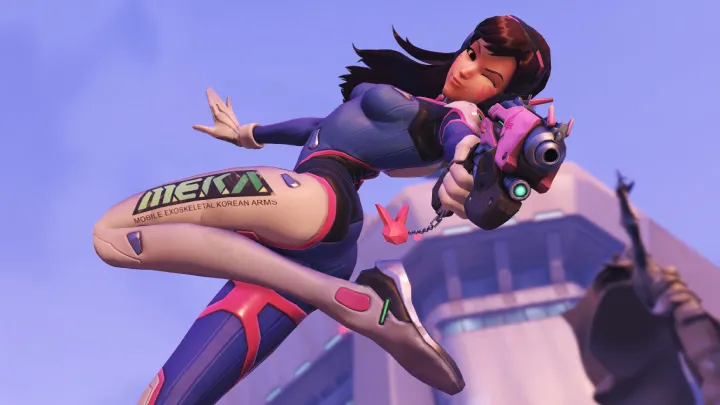
In the original 6v6 format, the relationship between the Main Tank and the Off-Tank was the cornerstone of the game's depth. Characters like D.Va and Zarya weren't just secondary bruisers; they were the "enablers" who filled the gaps left by the Main Tank. When Reinhardt dropped his shield to swing his hammer, Zarya’s Projected Barrier provided the necessary window of safety. This interdependency meant that players had to communicate and time their abilities in a rhythmic cycle of protection and aggression.
The loss of this duo in Overwatch 2 created a massive void in the tactical layer of the game. Without an Off-Tank to peel for the backline or contest high ground while the Main Tank held the front, the game shifted toward a more chaotic, "every man for himself" style of play. This was the first major step in eroding the game's core identity as a team-based puzzle, replacing it with a demand for individual mechanical carry-potential.
2. The 5v5 Shift: Designing for Solo Agency Over Team Flow
The transition to 5v5 was marketed as a solution to "Stun Lock" and "Double Shield" metas, but the underlying goal was to increase individual agency. Blizzard recognized that in 6v6, a single player often felt powerless if their team didn't coordinate. By removing one tank and buffing the remaining one into a "Raid Boss," they hoped to make the game feel more rewarding for the solo player. However, this came at a steep cost: the loss of the "Team Flow."
In the current 5v5 environment, the interdependency has been thinned. Tanks now have to be self-sufficient, leading to a design philosophy where they are given excessive health, damage, and survivability. This "power creep" makes the Tank feel like a separate entity from the team rather than a part of it. The game has transitioned from a tactical ballet into a brawler, where the primary goal is to out-stat the opponent rather than out-maneuver them through combined utility.
3. The Homogenization of Support Utility: From Enablers to Duelists
To keep pace with the increased lethality of 5v5, the Support role underwent a radical transformation. In early Overwatch, Supports were fragile but possessed game-breaking utility—think of Mercy’s original Mass Resurrect or Ana’s Sleep Dart. As the game evolved, however, Supports were increasingly given "get out of jail free" cards and high damage output (e.g., Kiriko’s Kunai or Baptiste’s Immortality Field) to survive without an Off-Tank’s protection.
The Rise of the "Support Duelist"
- Kiriko: Designed with a teleport and invulnerability suzu to survive dives solo.
- Illari: A Support who functions primarily as a third DPS with a healing pylon.
- Lifeweaver: Uses Petal Platform and Life Grip to forcibly move teammates, replacing organic coordination with scripted saves.
This shift means Supports no longer rely on their team for protection; they are expected to win 1v1s against Flankers. While this makes the role more "fun" for the individual, it further dismantles the interdependency that once defined the role.
4. The Crowd Control Conundrum: Balancing Frustration and Strategy
One of the most controversial changes in the move to Overwatch 2 was the systematic removal of Crowd Control (CC) from non-tank heroes. Flashbangs, freezes, and hacks were nerfed or removed because they were "unfun" to play against. While this certainly reduced player frustration, it also removed the primary tools used to punish uncoordinated aggression.
Without reliable CC from the Damage (DPS) role, highly mobile heroes like Tracer and Genji became significantly harder to peel against. This forced the developers to buff Support survivability even further, creating a cycle of "un-killable" heroes. The removal of CC was a move toward a more "pure" shooter experience, but it stripped away the strategic layers that allowed less mechanically gifted players to contribute through tactical denial.
5. The Death of the "Niche Hero": Why Specialists Are Fading
Overwatch was originally built on the idea of hero swapping to counter specific threats. Heroes like Symmetra, Torbjorn, and Mei were "Specialists" who excelled in very specific scenarios. In the modern era, these heroes have been reworked repeatedly to be more "generalist." Symmetra moved from a Support to a DPS, and her unique utility (like her shield generator) was removed in favor of more consistent beam damage.
Impact on Strategy:
- Map Specificity: Maps no longer require unique compositions; "Rush" or "Dive" works almost everywhere.
- Counter-swapping Fatigue: Because heroes are more similar, countering has become a game of "rock-paper-scissors" with stats rather than utility.
- Loss of Creativity: The removal of niche abilities limits the "creative" solutions teams can find for difficult chokepoints.
6. The Power Creep of "Save" Abilities: The Immortality Problem
As the game became faster and more lethal, the developers introduced more "Save" abilities to prevent instant deaths. Baptiste’s Immortality Field, Kiriko’s Protection Suzu, and Lifeweaver’s Life Grip are all responses to a world where there is no second tank to mitigate damage. These abilities are incredibly powerful, but they often feel like they "rob" the opposing team of a well-earned kill.
This creates a "burst damage vs. burst healing" meta. To kill anything through these powerful saves, DPS heroes must have immense burst damage, which in turn necessitates more powerful healing and saves. This cycle is a direct result of the breakdown in hero interdependency; instead of consistent, team-wide mitigation, we now rely on individual "invincibility buttons" to survive.
7. Map Design and the "Long Sightline" Meta
The issue of hero interdependency is also visible in the evolution of map design. Newer maps, such as those in the "Push" or "Flashpoint" game modes, feature much larger, more open spaces with multiple flanking routes. While this prevents the "choke point" stalemates of 2016, it also makes it nearly impossible for a single Tank to provide meaningful cover for their team.
On these sprawling maps, heroes with high mobility or long-range hitscan capabilities (Widowmaker, Sojourn) dominate. The "team bubble" has burst; players are often scattered hundreds of meters apart. This environment further encourages solo-play, as the distance between teammates makes it difficult to layer abilities effectively. The environment itself is now designing the "team" out of the "team shooter."
8. The Competitive Ladder vs. The Professional Stage
The gap between how Overwatch is played on the competitive ladder and how it is played in professional Overwatch (the former Overwatch League) has never been wider. Professionals still find ways to create interdependency through frame-perfect timing, but for the 99% of the player base, the game has become increasingly individualized.
This creates a balancing nightmare. A hero that is balanced for a coordinated 5-man team may be oppressive in a "solo-queue" environment where no one is talking. Blizzard’s recent balance philosophy has leaned heavily toward the solo-queue experience, leading to "flat" hero designs that lack the high-skill-ceiling synergies that made the game a premier esport in its early years.
9. Visual Clarity and the Chaos of Visual Effects
As hero interdependency decreased, the "visual clutter" of the game increased. With every hero needing their own survivability, utility, and damage-dealing ultimates, the screen is often filled with a chaotic mess of neon effects. In 6v6, the "battle line" was usually clear—two tanks at the front, DPS in the middle, Supports at the back. In 5v5, the battle is 360 degrees.
This chaos makes it harder for players to recognize when a teammate needs help, further discouraging interdependent play. If you can’t tell what’s happening in the "particle soup" of a team fight, you are more likely to focus solely on your own crosshair and your own cooldowns. The game’s aesthetic evolution has mirrored its mechanical evolution: moving away from a clear, structured team fight toward a frantic, individualized skirmish.
10. Conclusion: Can Overwatch Reclaim Its Soul?
The issue of eroding hero interdependency is not just a balance problem; it is a philosophical one. Overwatch 2 is, by many metrics, a more polished and faster-paced game than its predecessor. It has successfully eliminated many of the frustrations of the 6v6 era, such as endless stalemates and oppressive CC. However, in doing so, it has sacrificed the very thing that made it a genre-defining title: the feeling of being a vital, specialized cog in a grand, complex machine.
To move forward, the developers must find a way to re-introduce synergy without re-introducing frustration. This might involve more "combo-based" abilities or map designs that naturally force teams to work together. If Overwatch continues down the path of individualization, it risks becoming just another hero-themed deathmatch game. The true "redemption" for Overwatch lies not in more heroes or more maps, but in a return to the idea that we are stronger together than we are apart.
Overwatch's shift from 6v6 to 5v5 has eroded hero interdependency, transforming a tactical team-based puzzle into an individualized, brawler-style shooter.