.webp)
Royal Match: The Illusion of Fair Play — How Level Design and Luck Manipulation Shape Player Progress
Introduction
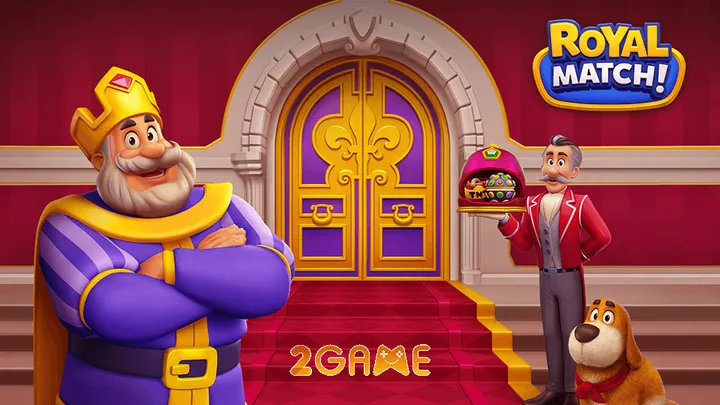
Royal Match is often praised as one of the most polished and generous match-3 puzzle games on the mobile market. Developed by Dream Games, it stands out for its high-quality animations, lack of forced ads, and smooth progression during early stages. Millions of players worldwide have been drawn in by its promise of fair gameplay and satisfying puzzle design.
However, as players advance deeper into the game, a recurring concern emerges across communities, reviews, and long-term player discussions: the growing perception that Royal Match subtly manipulates luck and level outcomes to control player progression. This article explores how Royal Match’s level design, booster dependency, and probability systems raise questions about fairness, transparency, and player trust—and why this issue has become central to the game’s identity.
1. Royal Match’s Early Reputation for Fairness
Royal Match did not initially gain popularity through aggressive monetization or viral gimmicks.
Instead, its early success came from offering what many players described as a “fair” match-3 experience. Levels felt winnable without boosters, cascades occurred naturally, and failures often felt like a result of player error rather than bad luck.
Why Players Trusted the Game
In its early stages, Royal Match built trust by:
- Avoiding forced ads
- Offering generous free boosters
- Providing consistent difficulty scaling
This reputation became one of its strongest selling points.
2. The Shift in Difficulty After Long-Term Progression
As players pass hundreds or even thousands of levels, the game’s tone changes.
Levels become longer, objectives more complex, and move limits tighter. While increased difficulty is expected, many players report that progress begins to feel artificially constrained.
A Common Player Experience
Long-term players frequently describe:
- Repeated near-wins
- Levels failing with one move remaining
- Sudden lack of helpful cascades
These patterns raise suspicions about underlying probability adjustments.
3. The Role of Cascades and Controlled Randomness
At the heart of Royal Match lies controlled randomness.
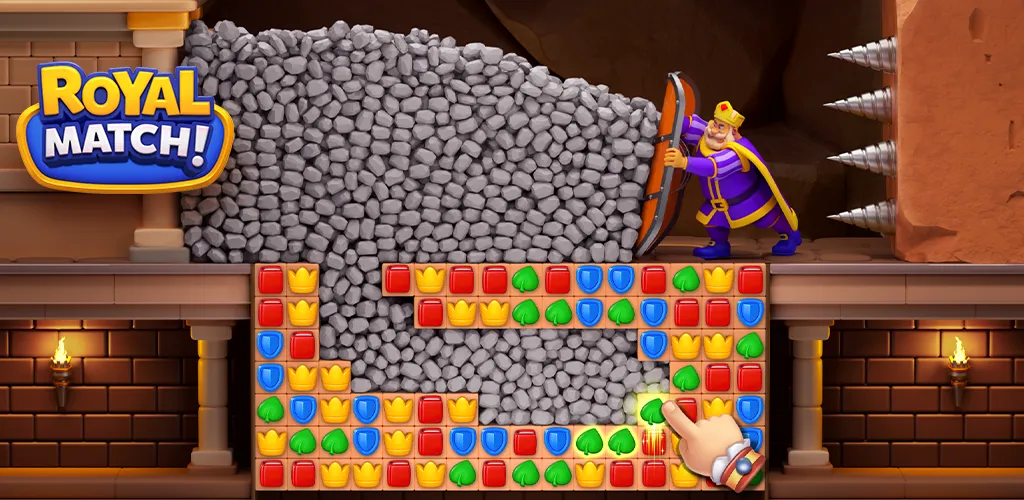
Match-3 games rely on cascades—automatic matches created after tiles fall. In Royal Match, cascades are visually impressive but increasingly inconsistent at higher levels.
When Randomness Feels Predictable
Players begin to notice:
- Cascades appearing more often after failures
- Favorable tile drops following booster use
- Dry spells during repeated attempts
This creates the impression that the game adjusts outcomes based on player behavior rather than pure chance.
4. Near-Win Design and Psychological Pressure
One of the most controversial design choices in Royal Match is its frequent use of near-win scenarios.
Failing a level by one move is emotionally powerful—it suggests that victory was just within reach.
Why Near-Wins Matter
Psychologically, near-wins:
- Increase emotional investment
- Encourage repeated attempts
- Make booster purchases feel justified
When near-wins occur too often, players begin to question whether they are engineered rather than organic.
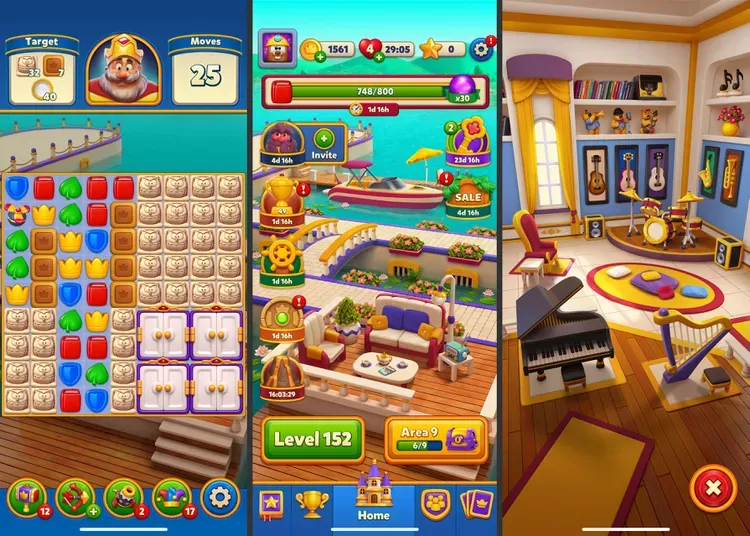
5. Booster Dependency and Artificial Walls
Boosters play a major role in Royal Match’s economy.
While optional early on, boosters become increasingly necessary at later stages. Some levels appear mathematically improbable without external help.
The Booster Funnel
Players report that:
- Certain levels feel impossible without boosters
- Success rates jump dramatically after booster use
- Free boosters dry up during difficult streaks
This reinforces the idea that progression is intentionally slowed.
6. Monetization Without Ads: A Double-Edged Sword
Royal Match is widely praised for not forcing ads between levels.
However, this absence shifts monetization pressure entirely onto boosters and extra moves.
The Hidden Trade-Off
Instead of ads:
- Difficulty spikes encourage spending
- Extra moves are offered at emotional moments
- Purchases feel like solutions, not luxuries
This model is subtle, but highly effective.
7. Community Discussions and Growing Skepticism
As Royal Match’s player base matures, online discussions have evolved.
Early praise has given way to cautious skepticism, especially among high-level players.
Recurring Community Themes
Across forums and reviews:
- Players question “rigged” levels
- Some quit after repeated stalls
- Others accept manipulation as standard
The divide reflects changing expectations around fairness in mobile games.
8. The Absence of Transparency in Probability Systems
Royal Match does not disclose how its random systems work.
There is no public explanation of tile distribution, cascade odds, or adaptive difficulty mechanisms.
Why Transparency Matters
Without transparency:
- Players rely on pattern recognition
- Trust erodes over time
- Success feels conditional, not earned
In strategy-based puzzle games, this lack of clarity can be damaging.
9. Industry Context: Royal Match Is Not Alone
Royal Match is not unique in using adaptive difficulty.
Many top-grossing mobile puzzle games employ similar systems to balance engagement and monetization.
A Broader Industry Trend
Common tactics include:
- Dynamic difficulty adjustment
- Emotional timing for offers
- Progression gating through probability
Royal Match simply executes these systems more smoothly than most.
10. The Long-Term Risk to Player Trust
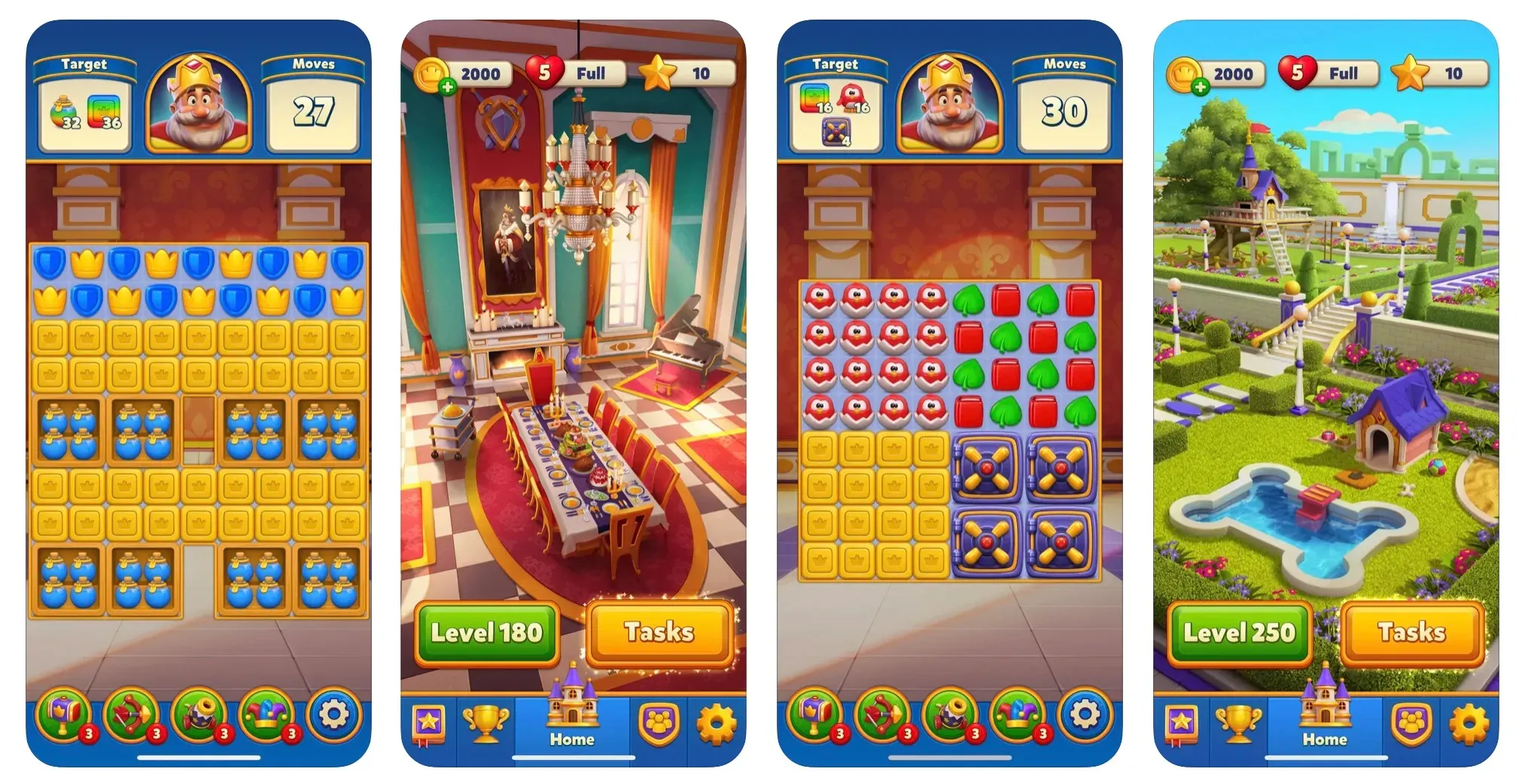
The central question facing Royal Match is sustainability.
Can a game built on perceived fairness maintain trust if players feel outcomes are controlled?
What’s at Stake
If skepticism grows:
- Long-term retention may decline
- High-level players may disengage
- The brand’s reputation could shift
Trust, once lost, is difficult to regain.
Conclusion
Royal Match remains one of the most visually polished and accessible match-3 games on the market. Its smooth onboarding, ad-free experience, and satisfying animations make it easy to recommend—at least initially. Yet beneath this polish lies a growing concern: the sense that player progress is subtly guided, slowed, and monetized through controlled randomness and psychological design.
This does not make Royal Match deceptive by industry standards, but it does place it at a crossroads. As players become more aware of how modern mobile games operate, transparency and fairness are becoming competitive advantages, not obstacles. Whether Royal Match evolves to address these concerns or continues down its current path will define how it is remembered in the long run.
160-Character Summary
Royal Match faces criticism as players suspect controlled luck, near-win design, and booster dependency are quietly shaping progression and monetization.