 peegameh5.com
Minecraft Review & Beginner Guide: How to Survive Your First Night
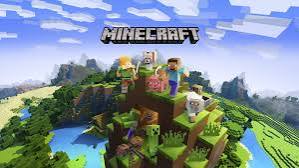
The sun is going down, and you have no idea why that is a problem. You have spent the last twenty minutes punching trees, because that is the only thing the game has let you do, and you have a small pile of wood, a vague sense that you ought to turn it into something, and a landscape of rolling green hills that has been, until this moment, perfectly peaceful. Then the sky turns orange, then purple, then black, and somewhere in the darkness behind you there is a sound like a rattle of bones. You turn around. Something is walking toward you. You have no weapon, no shelter, and no instructions, and the game, which has told you nothing from the moment you spawned, is clearly not going to start now.
This is the opening of Minecraft for almost everyone who has ever played it, and the strange fact at the center of one of the best-selling games of all time is how deliberately it withholds help at exactly this moment. Mojang Studios and its predecessors built a game in which you are dropped into a world with no objective, no tutorial worth the name, and no warning about what happens after dark. The recipe for a pickaxe is not on screen. The reason you should not dig straight down is not mentioned. The knowledge you need to survive is out there, in the world and in the heads of people who have already survived, and the game’s most radical design decision is its trust that you will go and find it.
This is a combined review and guide, and the two halves are connected by that idea. The review argues that Minecraft’s refusal to explain itself is both its greatest strength and its most honest flaw, and that the real instruction manual is a vast, informal, human network of friends, videos, wikis, and half-remembered tips. The guide then does what that network does: it tells you what you need to know to make it through the first night, and the first week, without spoiling the discoveries that make the game worth playing.
A Game That Refuses to Explain
To understand why Minecraft feels the way it does, it helps to remember how almost every other game treats its opening minutes. Modern design practice treats the first hour as a carefully managed onboarding experience: prompts appear, tooltips explain, early challenges teach one mechanic at a time, and the player is guided toward competence. Minecraft ignores almost all of this. Its opening is a blank landscape and an empty hand.

The game has softened this slightly over the years. A recipe book now suggests what you can craft with the materials you hold, and there are tutorial worlds for those who want a gentler introduction. But the core experience remains one of discovery by trial and error. You learn that trees give wood by hitting them. You learn that wood becomes planks, planks become a crafting table, and a crafting table unlocks tools. You learn that stone requires a pickaxe, that coal makes light, that iron must be smelted. None of it is announced. All of it is found.
That structure produces a kind of learning that is very different from instruction. When a game tells you something, you receive it. When you discover something, you own it, and the difference is visible in the way players talk about Minecraft. They remember the first time they found diamonds, the first time they fell into lava, the first time a green creature crept up behind them and the screen filled with white. These are not tutorial memories. They are stories, and the game has turned the process of learning into a source of personal narrative.
The Community as the Manual
But discovery has limits, and there are things in Minecraft that no player would find by accident. Nobody guesses how to build a Nether portal. Nobody stumbles onto the logic of redstone, the game’s system of in-world circuitry. Nobody works out, unaided, the strategy for finding a stronghold or defeating the final boss. For these, the game relies on something outside itself: other people.
This is where Minecraft becomes a social phenomenon rather than merely a solo experience. Over its lifetime, a vast ecosystem of knowledge has grown around it: wiki pages that document every block and mob, video creators who demonstrate techniques and build elaborate machines, forums where players trade strategies, and, most importantly, friends and family members who simply tell you what they know. The game’s silence on instruction created a vacuum, and the community filled it.
The result is a rare thing in modern gaming: a game that is learned socially. Many players can name the person who taught them to play, whether a sibling, a classmate, or a stranger on a server. The knowledge is passed along in conversation, in shared worlds, in the casual gesture of one player showing another how to do something. In that sense the game’s refusal to explain is not a failure of design but a kind of invitation, a way of making players dependent on each other.
It is also a practical reason the game has lasted. Because its knowledge lives in the community rather than in a fixed tutorial, it can evolve with the game. Mojang now ships content in regular drops, and Java and Bedrock editions both moved to year-based version numbers in 2026, with updates such as Tiny Takeover, Chaos Cubed, and the drops that followed adding new mobs, biomes, and mechanics. Each new addition sends players back to the community to learn how it works, which keeps the cycle of shared discovery going.
What the Game Gets Right
Judged as a game rather than a phenomenon, Minecraft’s strengths are rare and substantial. The first is the sense of ownership. Almost everything in the world can be mined, moved, and rebuilt, and the resulting structures, whether a humble dirt hut or an elaborate castle, feel like yours in a way few games can match. The world responds to your decisions at a fundamental level, and the persistence of those decisions gives them weight.
The second is the balance between safety and danger. The game’s day-night cycle creates a natural rhythm: daytime is for exploring and gathering, and nighttime is for shelter and caution. Hostile creatures emerge in the dark, which turns darkness into a constant, readable threat. This simple mechanic generates tension without any scripting, and the satisfaction of lighting up your surroundings and making them safe is one of the game’s most reliable pleasures.
The third is the open-endedness of goals. A player can focus on survival, exploration, building, farming, trading, redstone engineering, or simply wandering, and the game supports all of them. There is a nominal end, a dragon in a distant dimension, but many players never fight it, and the game does not mind. That freedom is a form of respect for the player’s time and imagination.
The fourth is the way the game scales with its audience. Children can play it as a creative toy, and adults can approach it as a complex engineering sandbox. The same world can host a quiet afternoon of gardening and an elaborate multi-day construction project, and the game accommodates both without strain.
A few of the design choices that make this work:
- Everything is made of blocks. The consistent, simple unit of construction makes the world easy to understand and manipulate.
- Danger is readable. Darkness, caves, and certain creatures signal risk without needing explanation.
- Progress is player-defined. There are milestones, but no required path, and players choose their own goals.
- Persistence creates attachment. The world remembers what you build and what you destroy.
Where It Chafes
For all its virtues, Minecraft has real weaknesses, and an honest review should name them. The most obvious is the opening. For a new player with no guidance, the first hours can be bewildering and occasionally punishing, and the game’s reluctance to explain can slide from intriguing into frustrating. Some players quit before they reach the point where the experience becomes rewarding, and the reliance on outside sources of knowledge can feel like homework.
A second concern is the grind. Certain activities, such as gathering large quantities of resources or building massive structures, can be time-consuming, and the game offers few shortcuts. Players who enjoy the process will find this satisfying, while those who prefer a faster pace may find it tedious.
A third is the interface and inventory management. Handling a growing collection of items, organizing storage, and navigating menus can become cumbersome as a world develops, and while the game has improved in this area, it remains a source of friction for many.
A fourth is the fragmentation of the experience. The game exists in multiple editions, with differences in features, performance, and community, and the relationship between them can be confusing for newcomers. Mojang has worked to bring the versions closer together, including the shared year-based numbering and the addition of features like peer-to-peer multiplayer and friends lists to Java Edition, but differences remain.
Finally, there is the question of pacing in updates. The steady stream of drops adds variety, but it can also make the game feel like a moving target, and long-time players may find that some additions sit awkwardly alongside the game’s original character. This is a matter of taste, and the community’s debates about it are a perennial feature of the game’s culture.

The Guide: Your First Night
Now to the practical half. Everything above explains why the game does not tell you what to do. What follows does, in the spirit of the friend who leans over your shoulder and says, here, try this. A caution before starting: Minecraft is updated frequently, and details such as the exact depth at which valuable ores appear can shift between versions. The principles here are durable, and anything numeric is worth confirming in the game or on the official wiki.
The first goal is to survive until dawn, and there are two ways to do it. The first is to find or build a shelter. The second is to avoid the night entirely by sleeping, which requires a bed, which requires wool, which requires sheep and a bit of luck. For most new players, the practical approach is to build a simple shelter before dark.
Here is a sequence that works for most worlds:
- Punch trees. Collect several logs. They are the foundation of everything.
- Craft planks, then a crafting table. This unlocks most of the tools and items you need.
- Make a wooden pickaxe and axe. The pickaxe lets you mine stone, and the axe speeds up wood gathering.
- Mine a little stone and make better tools. Stone tools are faster and more durable than wooden ones.
- Gather coal, or make charcoal. You will need it for torches, and torches make everything safer.
- Build or dig a shelter. The simplest option is to dig into a hillside and seal the entrance, or to build a small enclosed room.
- Light it up. Place torches inside so that nothing can spawn in your shelter.
- Wait for morning. Use the time to craft, mine nearby, or organize your supplies.
A few extra tips make the night easier:
- Light is your friend. Hostile creatures spawn in darkness, so torches around your base reduce the risk dramatically.
- Keep your distance from green creatures. The ones that hiss will explode if they reach you, so retreat or fight from range.
- Do not dig straight down. You may fall into a cave or lava. Dig stairs instead.
- Eat. Hunger drains your health over time, so keep food on hand.
- Mark your base. If you play on Java Edition, the coordinates screen can help you find your way home.
The Guide: Your First Week
Once you have survived the first night, the game opens up, and the next several days are about building a stable foundation. The priorities are food, shelter, tools, and light, roughly in that order.
Food comes first because it is the resource that keeps everything else possible. Look for animals to hunt, but also consider starting a small farm. Wheat, carrots, and potatoes are easy to grow, and a few rows near your base provide a reliable supply. Animals can be bred, which gives you a renewable source of meat and other materials.
Next, upgrade your tools. Iron is the key resource at this stage, found underground and smelted in a furnace. An iron pickaxe unlocks the ability to mine more valuable materials, and iron armor and a shield dramatically improve your survivability. Cave exploration is rewarded here, but it is also dangerous, so go in with torches, food, and a plan to find your way out.
Mining safely is a skill worth learning early. A few principles help:
- Mine in a pattern. Tunnels with a consistent shape make it easier to navigate and to find resources.
- Watch your footing. Lava and drops are the most common causes of sudden death, so never move blindly, especially near flowing liquids.
- Place torches as you go. They mark your path and prevent surprise spawns.
- Listen. The game’s audio cues often warn you of nearby creatures before you see them.
- Carry a water bucket. It can extinguish fires, stop falls, and neutralize lava in an emergency.
As your base grows, organize it. Use chests to store materials, sorted by type, so that you are not hunting for items later. Build a few basic defenses, such as lighting and fences, to keep creatures away. Consider establishing a bed so that you can sleep through the night and set your respawn point.
Beyond the First Week
With a stable base, the game’s larger systems begin to beckon. The Nether, a hostile dimension reached through a portal built from obsidian, offers rare resources and new challenges. It is dangerous, and preparation is essential: bring good armor, plenty of food, building blocks, and a way to escape. Villagers, the game’s trading characters, let you exchange resources for useful items, and a trading setup can become a powerful economic engine. Redstone, the in-game circuitry system, allows you to build automated farms, hidden doors, and elaborate machines, and learning it is a journey in itself.
At this stage, the community becomes your most valuable resource. Wikis, videos, and fellow players can teach you techniques that would take hours to discover alone. A good habit is to try things yourself first, so that you experience the discovery, and then look up what you missed. That balance preserves the pleasure of exploration while saving you from avoidable frustration.
Playing with others accelerates everything. A friend can show you tricks, share resources, and help you build, and the social dimension is a large part of what has kept the game alive for so long. Whether on a shared server, a private world, or a cooperative session on a console, a second pair of hands transforms the experience.

The Mistakes Almost Everyone Makes
Most beginner errors in Minecraft come from underestimating how dangerous the world can be, or from treating it as a game with a fixed script. Here are the ones that cost new players the most:
- Digging straight down. You may land in lava or a deep cave. Dig stairs instead.
- Ignoring the night. The first dusk catches many players unprepared. Plan a shelter early.
- Wandering too far without a way home. Mark your base, carry supplies, and place landmarks.
- Neglecting food. Hunger sneaks up on you, and fighting on an empty stomach is a losing proposition.
- Fighting creepers up close. Their explosions are devastating. Keep your distance and use ranged attacks.
- Skipping torches. Light is cheap and prevents a great deal of trouble.
- Entering the Nether unprepared. It is far more dangerous than the overworld, and it punishes carelessness.
- Playing entirely alone and never asking for help. The community is the game’s real manual, and using it is not cheating.
None of these is fatal in the long run. All of them are instructive, and many players treasure their early mistakes as part of the experience.
The Verdict
Minecraft is a game that refuses to hold your hand, and in doing so it hands you something better: a world in which learning is an adventure and knowledge is a shared possession. Its design is generous in its freedom and stern in its silence, and that combination has proven irresistible to hundreds of millions of people across more than a decade. It is not a flawless experience. Its opening can bewilder, its grind can tire, and its sprawl can overwhelm. But its virtues are rare and durable, and the sense of ownership it creates is unmatched.
What lingers is the memory of that first night: the orange sky, the rattling bones, the frantic scramble to build something, anything, before the darkness arrived. Almost everyone who has played remembers it, and almost everyone remembers who taught them what to do next. That is the real achievement of Minecraft. It built a game so open that the instruction manual had to be written by the people who play it, and in doing so it turned a solitary survival challenge into one of the great shared experiences of modern gaming. The first night is still frightening. But now you know what to do, and you can tell the next person who spawns into the dark.