Prey: Unraveling the Mystery of Talos I – A Complete Story Explainer
Welcome to Talos I: A Station of Secrets
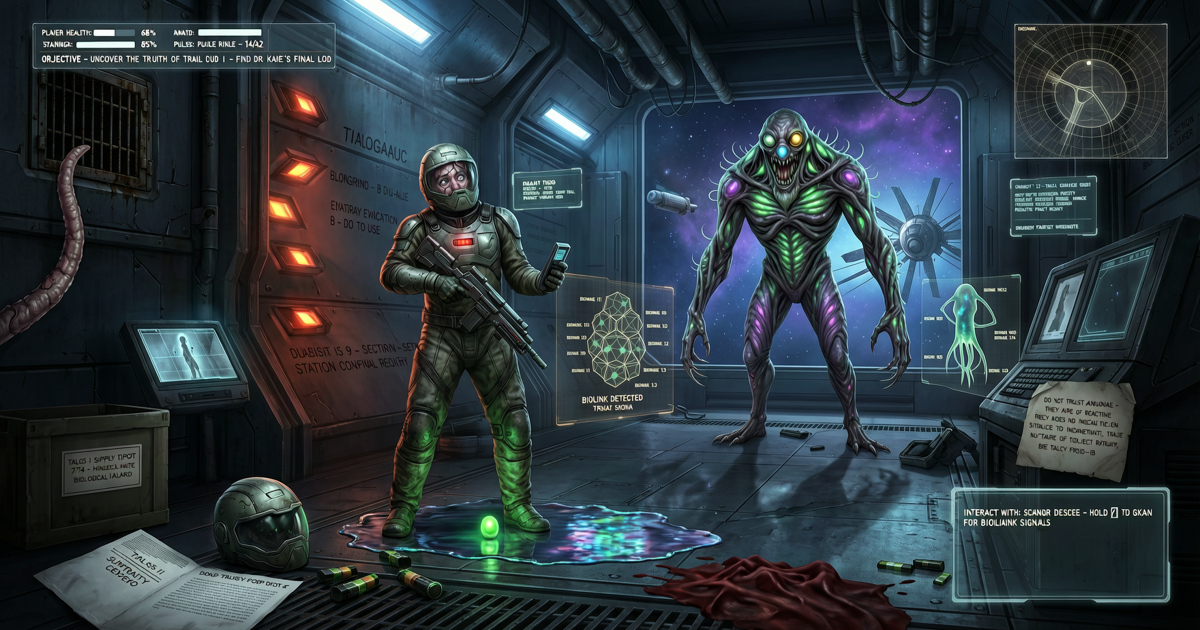
Arkane Studios' Prey (2017) is more than a first-person shooter; it's a masterclass in environmental storytelling and player-driven narrative. Set aboard the sprawling space station Talos I, the game invites players to piece together a complex story of scientific hubris, alien invasion, and identity. This article breaks down the key lore elements that make Prey unforgettable.
The Typhon: A Threat from Beyond

The central antagonists of Prey are the Typhon, a hostile alien species discovered by humanity. These creatures are energy-based, capable of mimicking objects, and feed on human consciousness. The Typhon are not mindless monsters; they possess a hive mind and a mysterious intelligence. The key Typhon types include:
- Mimics – Small shapeshifters that hide in plain sight, often as coffee cups or chairs.
- Phantoms – Humanoid Typhon formed from dead humans, wielding psychic abilities.
- Technopaths – Typhon that possess and control machines.
- Weavers – Creatures that produce Typhon Coral, a structure that expands the hive mind.
- Nightmare – A massive, relentless Typhon that hunts players who use too many Typhon powers.
Neuromods: The Price of Power
The Neuromod device allows users to install skills directly into the brain, unlocking superhuman abilities. Developed by Morgan's brother Alex Yu, the technology was originally intended for medical advancement but quickly turned toward military applications. Neuromods use Typhon Coral as a raw material, meaning every upgrade comes at an ethical cost. Players can choose to install human or Typhon-based neuromods, with the latter slowly transforming the user into something less human.
The Story: Who Is Morgan Yu?
You play as Morgan Yu, a researcher at Talos I. The game begins with psychological tests and a mysterious explosion that reveals the station is overrun by Typhon. As you explore, you find audio logs, emails, and keycards that tell the story of the station's downfall. A critical revelation is that Morgan had been experimenting with the Neuromod for years, creating multiple personalities and even erasing the player's memory. The ultimate truth: Morgan was the one who released the Typhon from containment as part of an experiment to test the station's security.
Key Characters and Their Roles
- Alex Yu – Morgan's brother and the CEO of TranStar. He is manipulative and sees the Typhon as a resource to be exploited.
- January – An operator created by Morgan to help destroy the station and prevent the Typhon from reaching Earth.
- December – Another operator with a conflicting agenda, urging Morgan to escape with Alex.
- Dahl – An assassin sent by the government to kill Morgan if they become too dangerous.
The Coral: Bridging Minds
The Typhon produce a substance called Coral, a neural network that connects all Typhon. As the Coral grows, it begins to form a massive web around Talos I. The Coral is also the key to understanding Typhon communication. Late in the game, you learn that the Coral is actually a psychic lattice that can store human minds. This becomes central to the ending choices.
Multiple Endings: Your Choices Matter
Prey offers several endings based on your actions and allegiances:
- Destroy the Station – Side with January, activate the self-destruct, and escape with survivors. But the Typhon is not fully destroyed.
- Escape with Alex – Side with December, use Alex's shuttle to flee. The Typhon follow, infecting Earth.
- Save the Station – Use the Nullwave device to neutralize the Typhon without destruction. A fragile peace.
- Kill Alex – Take matters into your own hands, but the future remains uncertain.
- The Post-Credits Scene – A mind-blowing twist reveals the entire game may be a simulation conducted by Alex Yu after Earth's fall, testing a Typhon hybrid (you) for empathy.
Themes: Identity and Humanity
At its core, Prey questions what it means to be human. Are you still Morgan Yu if your memories are replaced? Are Typhon creatures evil, or merely following their nature? The game forces players to confront the ethical implications of technology and the fragility of identity. The final simulation twist suggests that even a Typhon can learn empathy, blurring the line between monster and man.
Whether you're a first-time player or a veteran, understanding the lore of Prey enriches every encounter. Talos I is a character in itself, filled with stories of ambition, betrayal, and desperation. So next time you step onto that station, remember: nothing is as it seems.